
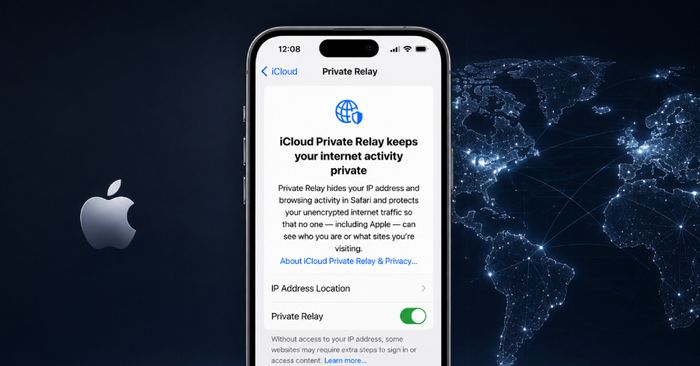
Apple’s iCloud Private Relay routes your Safari traffic through two separate relay servers so that no single party — not Apple, not your internet provider, not the website you visit — can see both your IP address and what you are looking at. Researchers Talal Haj Bakry and Tommy Mysk have now identified three WebKit browser engine features that quietly skip those relays and send traffic directly from your device, revealing your real IP address to any website that knows how to ask. The three bypass paths are: DNS prefetching, which resolves hostnames through your device’s normal DNS resolver instead of the proxy; WebAuthn Related Origin Requests, which cause your operating system’s credential service to fetch a validation file directly from the target site; and WebTransport, which opens a direct HTTP/3 connection that bypasses the proxy entirely. Because WebKit is the mandatory browser engine for every browser on iOS and iPadOS — Safari, Chrome, Firefox, Edge, Brave — all of them are equally affected.
The WebAuthn bypass is particularly concerning for privacy-conscious users. WebAuthn is the standard behind passkeys, the passwordless login technology now offered by many major sites. Any website that claims to support passkeys can silently configure a WebAuthn request that forces WebKit to reveal the browser’s actual IP address, even while Private Relay is active. “The website has to deliberately exploit it to associate the user’s current browsing session with their real IP,” Mysk told The Hacker News — meaning this requires a motivated attacker, but the bypass is real and exploitable by any site operator.
How to check if you’re affected
Affected devices are any iPhone, iPad, or Mac where iCloud Private Relay is enabled via iCloud+ settings, since the vulnerability is in WebKit and affects all browsers on those platforms regardless of which browser you use. macOS is also affected when using Safari or any browser that relies on WebKit’s proxy configuration APIs. Apple has not yet issued a patch. Until a fix arrives, users who depend on Private Relay for strong anonymity should be aware that websites can bypass it using the three paths above.