
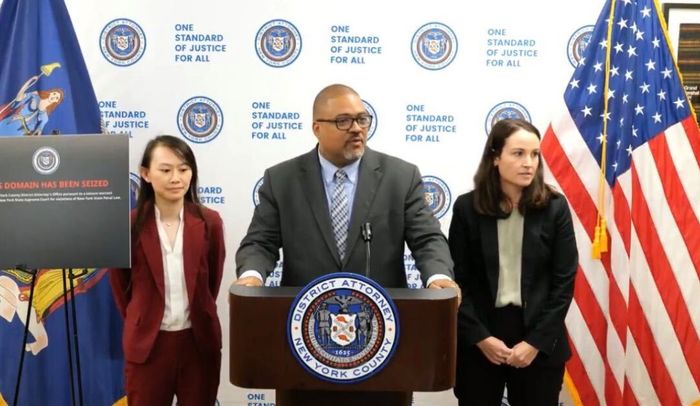
Manhattan District Attorney Alvin Bragg announced the seizure of domain names for twelve AI-powered deepfake pornography websites that hosted non-consensual sexual imagery of more than 1,200 real people. The sites, whose names were not publicly disclosed, explicitly marketed themselves as deepfake pornography platforms and allowed anyone to upload photos or videos of a real person to generate “hyper-realistic” sexual content featuring that person’s face and body. Bragg held a press conference Monday describing the scope of the operation, noting that while many victims are celebrities, investigators have also documented cases where abusive partners used the sites to threaten domestic violence victims.
The DA’s office seized the domains under laws against disseminating non-consensual intimate imagery. Bragg declined to confirm whether charges or arrests are imminent, saying only that the investigation is ongoing, and urged additional victims — many of whom had no idea the sites existed or that legal action was possible — to come forward. The takedown is part of a broader institutional response to the deepfake abuse problem: Microsoft filed a lawsuit last year against developers who used its Azure OpenAI services to create non-consensual intimate content, and the European Commission launched an inquiry into X’s Grok AI tool earlier this year after it was used to generate sexual images of a minor. Monitoring is continuing to catch any attempts to revive the platforms under new domains.