
What happened
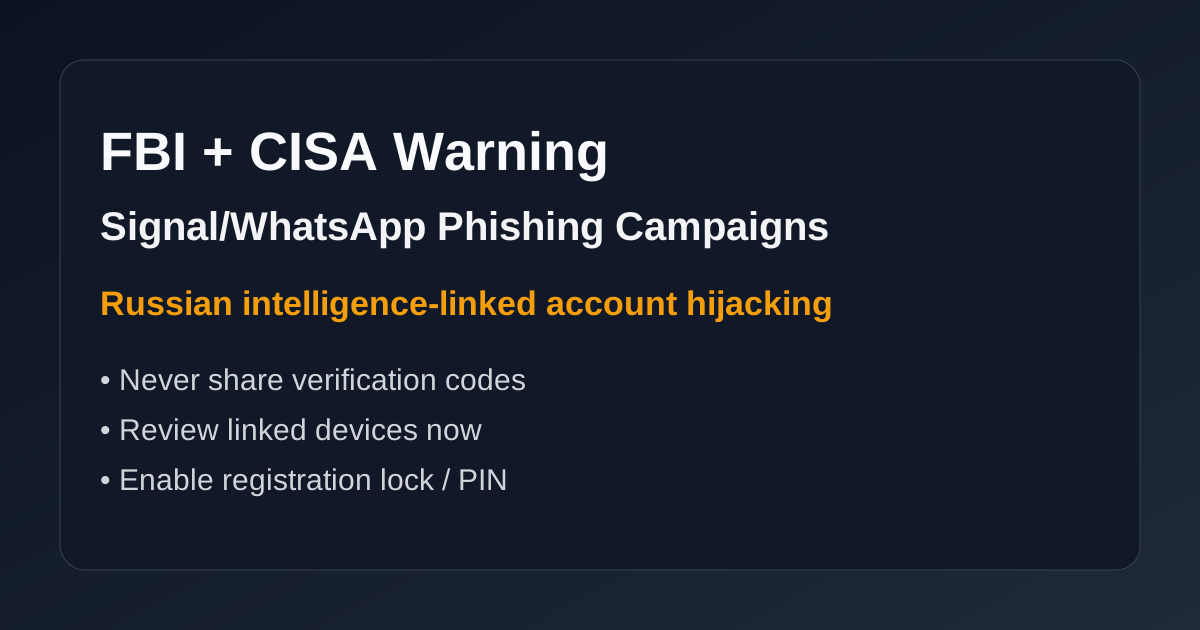
The FBI and CISA issued a joint public warning that cyber actors linked to Russian intelligence services are actively targeting commercial messaging accounts, including Signal and WhatsApp.
The campaign focuses on phishing and social-engineering methods (not breaking encryption):
- tricking targets into sharing one-time verification codes,
- getting victims to approve malicious device-linking requests,
- and abusing trusted contacts to spread additional account takeover attempts.
Why this matters
Compromised messaging accounts can expose:
- Sensitive chat history and contact networks,
- Ongoing coordination among staff and partners,
- Opportunities for follow-on impersonation and fraud from a trusted identity.
For organizations, this is both a privacy and operational risk: one hijacked account can quickly become a pivot point for broader compromise.
How to check if you’re affected
Use this quick verification flow from the FBI/CISA guidance:
- Check account/session history now
- In Signal/WhatsApp settings, review linked devices and active sessions.
- Remove any device you do not recognize immediately.
- Look for takeover indicators
- Unexpected OTP/code prompts, sudden logout events, or contacts receiving strange messages from your account.
- Security notifications about newly linked devices you did not approve.
- Identify who is high-risk in your org
- Prioritize staff in government, media, policy, security, and leadership roles for immediate review.
- Validate recovery readiness
- Confirm registration lock/PIN, account recovery controls, and trusted admin contacts are in place.
What defenders should do now
- Turn on strong account protections
- Require registration lock/PIN features where available.
- Use MFA and account recovery safeguards for linked email/phone accounts.
- Audit linked devices immediately
- Remove unknown linked devices/sessions.
- Re-authenticate accounts after suspicious prompts.
- Train users on messaging-specific phishing
- Never share verification codes.
- Treat QR/link-device prompts as high risk unless independently verified.
- Harden high-risk users first
- Prioritize executives, public officials, journalists, and security teams.
Sources
- https://www.cisa.gov/resources-tools/resources/russian-intelligence-services-target-commercial-messaging-application-accounts
- https://www.ic3.gov/PSA/2026/PSA260320
- https://www.bleepingcomputer.com/news/security/fbi-links-signal-phishing-attacks-to-russian-intelligence-services/
Bottom line
This is a live account-takeover threat aimed at trusted messaging channels. Defenders should treat unsolicited verification or device-linking prompts as potential intrusion attempts and harden messaging account controls now.