
What happened
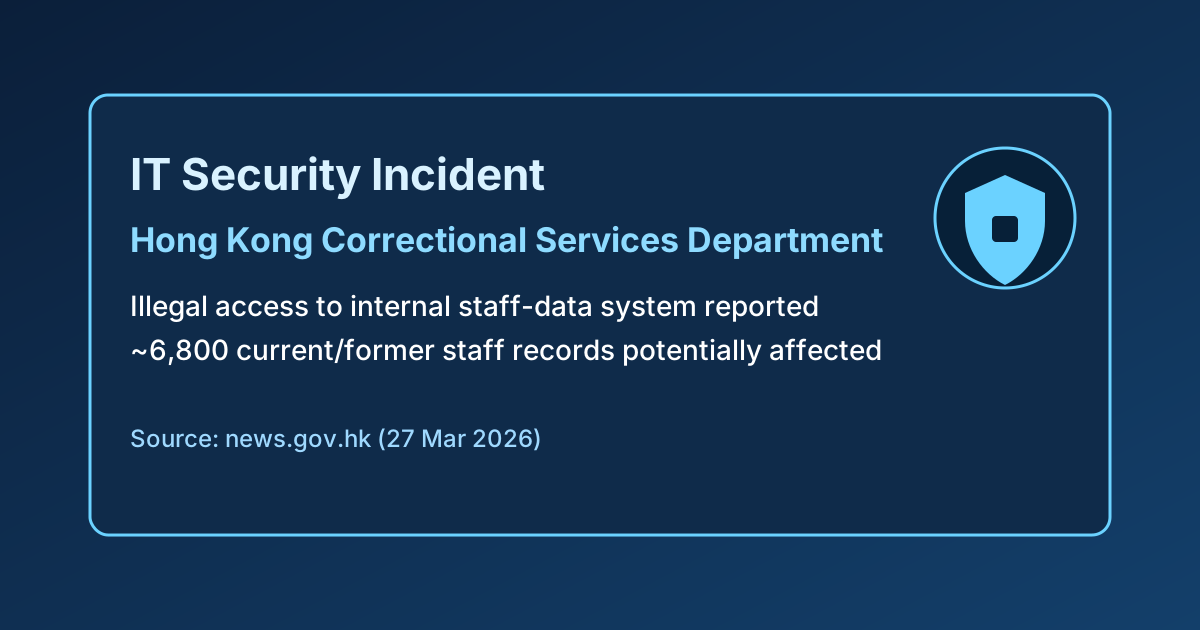
Hong Kong’s Correctional Services Department (CSD) said it discovered an IT security incident involving illegal access to one internal system, and then unauthorized access to another system storing staff personal data.
According to the official government statement, the affected data includes names, genders, dates of birth, academic qualifications, employment-history details, and email addresses for about 6,800 serving and departing staff.
CSD said it has reported the incident to Police and notified multiple regulators, including the Office of the Privacy Commissioner for Personal Data (PCPD) and the Digital Policy Office.
Why this matters
Even if no confirmed public leak is announced yet, personnel records can still be valuable for:
- targeted phishing and impersonation,
- account-reset and social-engineering attacks,
- long-tail identity-fraud attempts.
Government workforce datasets are particularly sensitive because attackers can combine them with previously leaked data to improve credibility in scams.
How to check if you’re affected
Potentially affected people/systems
- Affected products/systems: CSD internal Knowledge Management System and the linked staff-data IT system named in the official notice.
- Current or former CSD staff whose records were stored in the impacted internal systems.
- Security or HR teams responsible for accounts and contact channels linked to those records.
Concrete verification steps (15–30 minute triage)
Confirm whether you’re in the affected cohort
- Check official CSD notification channels for impacted-person guidance.
- If you are current/former CSD staff, assume elevated risk until confirmation.
Harden identity and email accounts now
- Change passwords for personal and work email accounts.
- Enable phishing-resistant MFA where available.
- Review recovery email/phone settings for unauthorized changes.
Watch for targeted social engineering
- Treat unsolicited messages referencing employment history or internal terms as suspicious.
- Verify requests through official phone numbers or known channels.
Add fraud monitoring controls
- Turn on account/login alerts for key services.
- Monitor financial and telecom accounts for unusual activity.
Escalate suspicious activity quickly
- Report potential scam attempts and account anomalies to your security team and relevant authorities.
Immediate defensive actions
- Start a phishing-awareness push for potentially exposed personnel.
- Force password + MFA hygiene checks for high-risk accounts.
- Review privileged and HR-linked account activity for unusual patterns since the incident window.
Sources
- https://www.news.gov.hk/eng/2026/03/20260327/20260327_231506_351.html (primary source)
- https://www.pcpd.org.hk/english/
Bottom line
CSD’s incident is a reminder that workforce-data breaches can become long-running phishing and identity-risk events. If you might be affected, treat your account hygiene and scam filtering as urgent, not optional.