
What happened
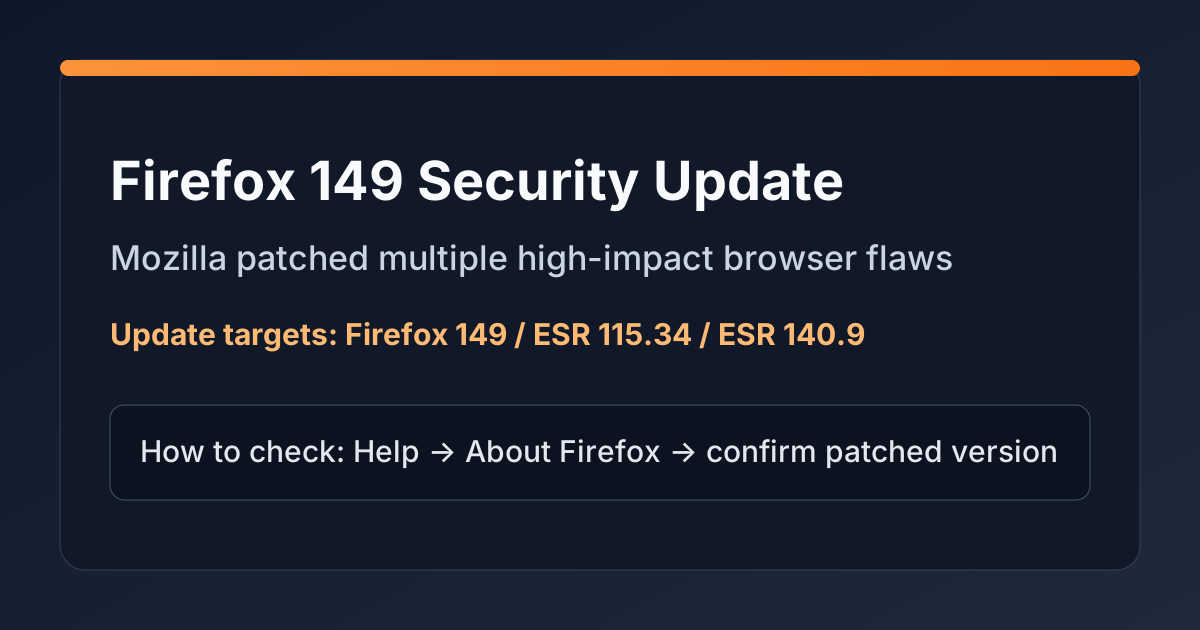
Mozilla published a major browser security update cycle on March 24, 2026, including:
- Firefox 149
- Firefox ESR 115.34
- Firefox ESR 140.9
- Matching Thunderbird updates
The advisories list a large number of fixed vulnerabilities, including multiple high-impact memory-safety issues and sandbox-escape bugs. In plain language: older browser versions may be easier for attackers to abuse via malicious web content.
Mozilla’s own advisories do not claim broad in-the-wild exploitation for every issue, but the bug classes involved (memory corruption and sandbox escapes) are exactly the kind defenders should patch quickly.
Why this matters
Web browsers are one of the most exposed apps on most computers. Even careful users can get hit by a compromised ad, malicious site, or booby-trapped page.
When a release fixes this many browser security issues at once, delaying updates increases unnecessary risk—especially for people on shared or work devices.
How to check if you’re affected
You are likely affected if your browser is older than:
- Firefox 149
- Firefox ESR 115.34
- Firefox ESR 140.9
Quick check steps
- In Firefox, open menu → Help → About Firefox.
- Confirm your version is at least one of the fixed versions above.
- Let Firefox finish updating and restart the browser.
- If you manage a fleet, verify policy-managed ESR channels also reached patched builds.
Immediate defensive actions
- Update Firefox and Firefox ESR endpoints as a priority patch.
- Restart browsers after update (don’t postpone restart prompts).
- For managed environments, confirm update compliance via endpoint tooling.
- Remind users not to ignore browser update prompts this week.
Sources
- https://www.mozilla.org/en-US/security/advisories/mfsa2026-20/ (primary source)
- https://www.mozilla.org/en-US/security/advisories/mfsa2026-21/ (primary source)
- https://www.mozilla.org/en-US/security/advisories/mfsa2026-22/ (primary source)
- https://www.mozilla.org/en-US/security/advisories/
- https://nvd.nist.gov/vuln/detail/CVE-2026-4721
Bottom line
If Firefox is part of your daily workflow, update now. This is a broad security-fix release, and fast patching is the simplest way to reduce browser-based attack risk.