
What happened
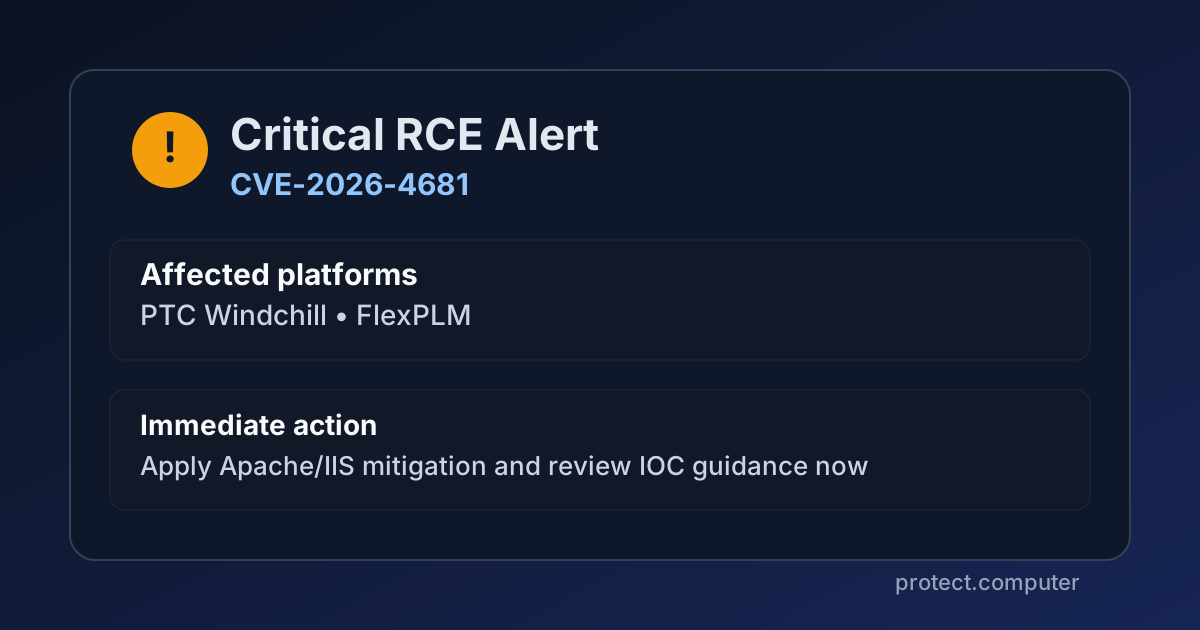
PTC published an urgent advisory for CVE-2026-4681, a critical remote code execution (RCE) vulnerability affecting Windchill and FlexPLM.
According to PTC, the bug can be exploited through deserialization of untrusted data. The vendor says patches are being developed/released for supported versions, but customers are urged to apply immediate mitigations now.
The advisory also includes indicators of compromise (IOCs), including suspicious request patterns, specific user-agent activity, and webshell/file artifacts.
Why this matters
Windchill and FlexPLM are enterprise product lifecycle management platforms used in manufacturing, engineering, and supply chains. A critical unauthenticated RCE risk in these systems can lead to full server compromise, data theft, and potential downstream operational disruption.
Even if your instance is not directly internet-facing, PTC recommends applying mitigations broadly across deployments (including file/replica servers), which suggests lateral-risk concerns in internal environments too.
How to check if you’re affected
Potentially affected systems/services
- Windchill PDMLink and FlexPLM branches listed in PTC’s advisory (11.x, 12.x, 13.x families, including CPS variants).
- Public-facing and internal Windchill/FlexPLM instances.
- File Server / Replica Server components connected to these deployments.
Quick verification steps
Inventory versions immediately
- Confirm whether your environment matches PTC’s listed affected lines.
- Prioritize public-facing systems first, then internal connected systems.
Apply vendor mitigation now
- Implement PTC’s Apache or IIS workaround rules to block the affected servlet path.
- Verify the rule is active after web server restart.
Hunt for compromise indicators
- Check for suspicious files such as
GW.class,payload.bin, ordpr_<8-hex-digits>.jsp. - Review logs for suspicious patterns like
run?p=,.jsp?c=,GW_READY_OK, and abnormal gateway exceptions.
- Check for suspicious files such as
If you cannot mitigate quickly
- Temporarily disconnect affected instances from the internet or shut down the service, per vendor guidance.
Immediate defensive actions
- Apply the mitigation rule to all Windchill/FlexPLM deployments, not only external endpoints.
- Escalate any IOC hit to incident response as a potential pre-RCE weaponization stage.
- Prepare rapid patch rollout as soon as PTC-released fixes for your branch are available.
Sources
- https://www.ptc.com/en/about/trust-center/advisory-center/active-advisories/windchill-flexplm-critical-vulnerability (primary source)
- https://www.bleepingcomputer.com/news/security/ptc-warns-of-imminent-threat-from-critical-windchill-flexplm-rce-bug/
- https://www.cve.org/CVERecord?id=CVE-2026-4681
Bottom line
If you run Windchill or FlexPLM, treat CVE-2026-4681 as urgent: apply vendor mitigation immediately, check IOC guidance, and move quickly when your patch path is published.